
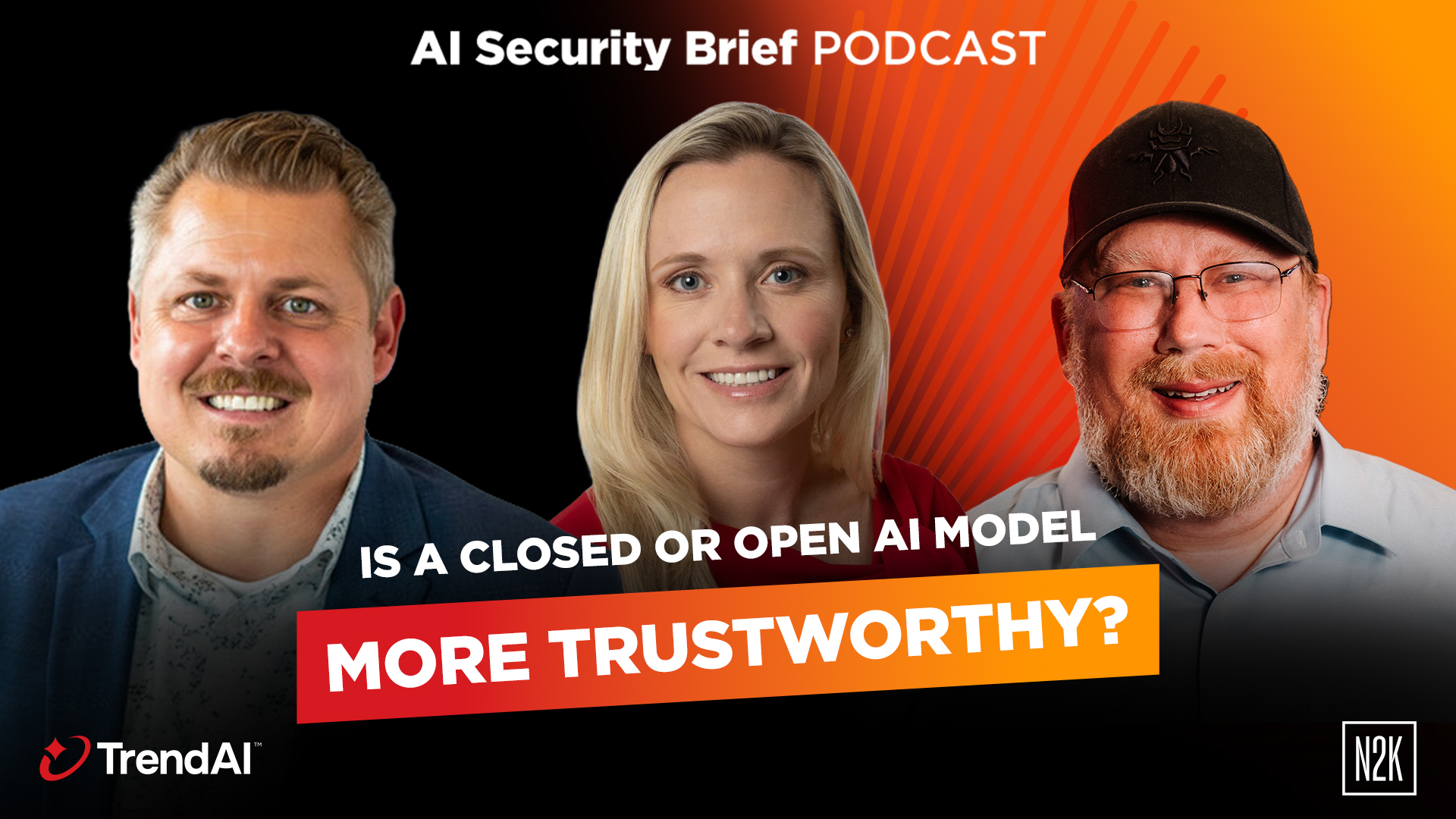


Is a closed or an open AI model more trustworthy?







There's no silver bullet when it comes to AI security strategy, and treating one model, tool, or vendor as the answer can limit an organization’s ability to adapt.
Morgan Adamski, who leads PwC’s Cyber, Data & Technology Risk practice, joins us to tackle two pressing questions: How should organizations choose between closed frontier models and open-weight alternatives? And how can they build a multi-model architecture flexible enough to keep pace as AI technology rapidly evolves?
Drawing on her work with boards, CISOs, and security teams, Morgan cuts through the “paralysis by analysis” surrounding these questions and offers security leaders a practical path forward.
You'll learn:
- Why the choice between closed and open-weight models isn’t binary
- How a multi-model architecture can improve agility, cost efficiency, and resilience
- Why data structure and data readiness for AI are critical before bolting AI onto a “Frankenstein” architecture
- Why mastering enterprise security fundamentals for AI is the highest-leverage move your team can make.
Why stick around:
Morgan shares clear guidance for making confident AI model decisions while preserving model-use flexibility, strengthening security, and helping your organization keep pace with rapid innovation.
Episode resources:
- Morgan Adamski on LinkedIn
- Frontier AI: The future of AI-driven cybersecurity
- When every weakness is visible: Leadership in the age of AI-exposed risk
- Related episode: Who governs your AI agents?
- Dustin Childs on LinkedIn
- Johnny Hand on LinkedIn
- TrendAI on LinkedIn
About AI Security Brief
AI Security Brief is where security and technology leaders come to get ahead. Join us for real conversations on the AI trends, threats, and decisions that can't wait.
About TrendAI™
TrendAI™ empowers organizations to lead the future of AI with proactive security designed to inspire innovation and eliminate risk. TrendAI™. AI Fearlessly.



