

The labor behind the labor.





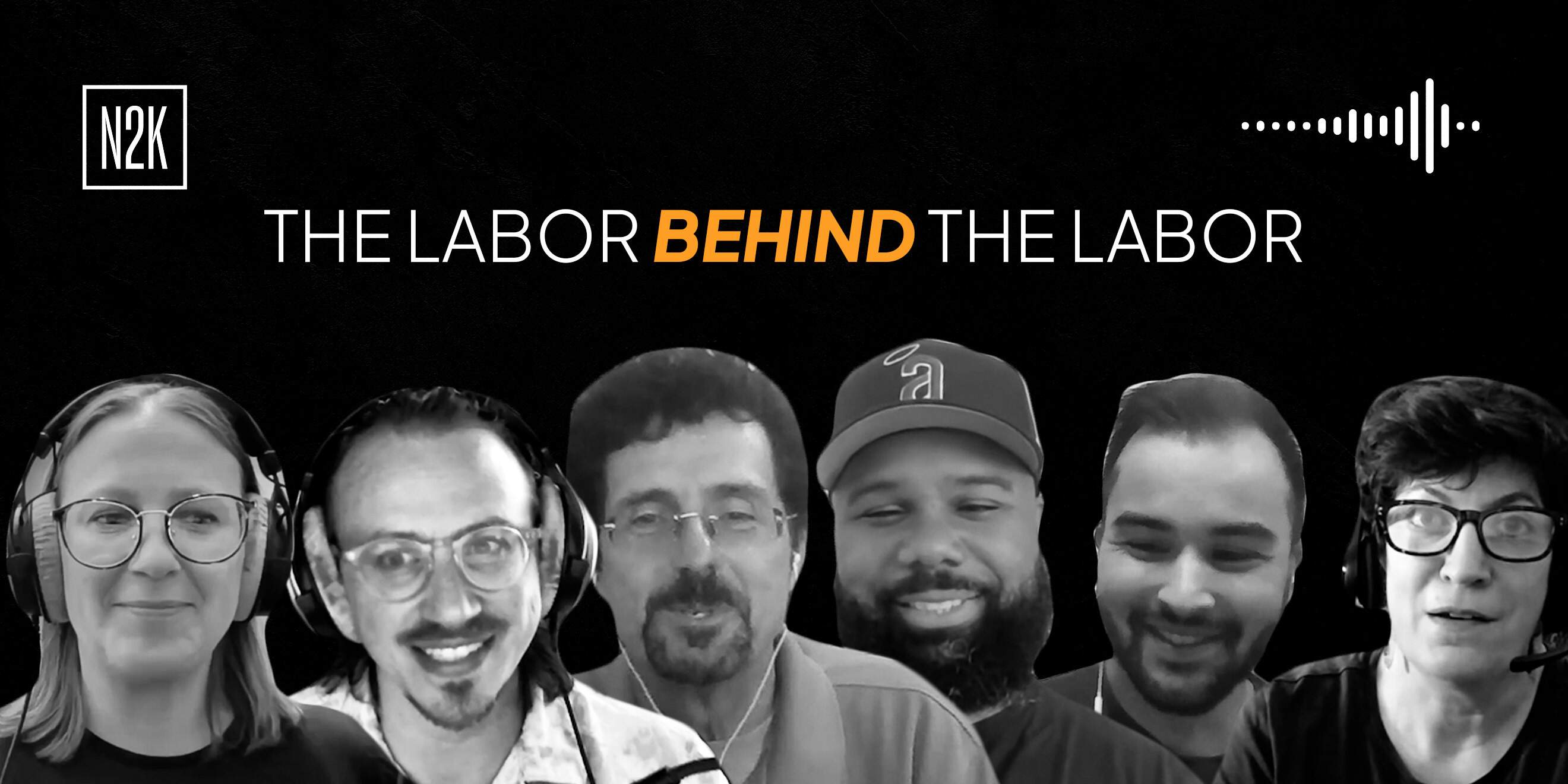
Ma'ayan Plaut: You're listening to the Cyber Wire Network, powered by N2K. While many people get fired up with a cookout on Labor Day, we here at N2K are getting fired up about the creative process. I'm Ma'ayan Plaut, N2K's Director of Enterprise Content Strategy, and I have the distinct pleasure of working with all of our talent here at N2K Networks as we create the things you know and trust. Everything you see and hear is meticulously crafted by some of the absolute best in the business. And I can tell you from being up close on this process every single day, it's so smooth that you probably don't even realize that there's a whole team of folks making it happen every single time, every single day. So for this Labor Day, we're going to celebrate with a different kind of episode. We're calling it the "Labor Behind the Labor." I get to spend day in and day out with these folks. And in a way, so do you. We're pulling back the curtain today to give you a look behind the scenes, to share the voices of the people who aren't always on the mic. Let me introduce to you Alice, Ann, Elliott, Ethan, George, and Sarelle. Just a few of the creative folks bringing heart, soul, and creativity to what we do and how we make. If you ever thought, "Wow, this show sounds so good," that's the styling of Elliott Peltzman, our executive director of audio. He makes everything with care and attention and deep audio nerdery. Let's hear his perspective on how he reimagined the theme music for one of our shows, "Threat Vector" from Palo Alto Networks and N2K. Elliott, I actually wanted to talk with you a little bit about this because I love the new music for "Threat Vector." I want to make sure that I know exactly how we made the thing that we made because I love it. Tell us more.
Elliott Peltzman: Well, first of all, thank you very much. I love being able to create music for my job. So if I'm all smiles, that's why. Well, "Threat Vector" is one of my favorite shows on N2K/Cyber Wire. So it was an honor to be able to kind of reimagine the music. I have a humble basement studio, like all audio engineers. And I actually got together with our coworker here, Tré Hester, and together we kind of cooked this up. I did all of the instrument, the instrumentation, the drums, the synths. Let's see, what's the like fun fact, little instrument that's snuck in there that no one can hear? There's definitely some samples that I like twisted and turned into like this evil, spooky-sounding almost kind of like whistle that's going behind. So I did all of that stuff. And then I brought Tré in who's a real guitarist, and he added all of this really cool, like David Gilmour kind of plucked, like, you know, Pink Floyd's The Wall, like bubbly, churning. And then once it drops that main line there, Tré is playing that also. It was a true N2K collaboration.
Ma'ayan Plaut: You said something that I want to pick up on. What's the difference between recording some of this stuff live versus doing it all sort of like in the program?
Elliott Peltzman: Tré's guitar is sending out an actual analog signal that's then being digitized, whereas everything else exists only in the digital domain.
Ma'ayan Plaut: If you two were sitting in a room working on this, like you could workshop it together in the moment. Like, ooh, that sounded good, but like what if we tried a little bit more like this?
Elliott Peltzman: That was exactly what the session was like, and that is exactly what I love about collaborating with real humans. You know, he plays something, I get excited by that energy, and I resonate with it, and I go, "Okay, that little arpeggio you did on that minor chord, let's, you know, move that up in inversion and start on the third, and then really hit that root right on the downbeat, do that. Oh wait, no, change up the rhythm. Tré is amazing, so he knows exactly what I'm talking about. And then we just enter this flow state together, where like, he can already hear what I'm describing to him before I even get the words out. It's absolutely the best. Music really is a language, and you don't get to speak it very often. What a lot of people don't realize about a lot of musicians is that we spend like 99% of the time playing by ourselves, and like, that's kind of fun. My gosh, is it so much more fun to like do it in real time with another person who speaks that same language.
Ma'ayan Plaut: What inspired the new music for "Threat Vector?"
Elliott Peltzman: So I always try and speak to what I love about a show's message and its own unique voice the best that music can. You know, it's a very different language, but I do think we've all had that experience where we're transported even deeper into the subject matter by the right piece of music. So it can be complementary. There were a lot of things I really liked about the old music that I did want to borrow from, but just kind of like elevate just a little bit more. First of all, I wanted it to just match a little bit more hand in hand. Like what I love about "Threat Vector" is that David does such an incredible job speaking with these super knowledgeable people about subject matter that I find just incredibly important. I mean, he's talking with these people about threats and attacks that are global and extremely serious. They're, you know, literally life-and-death situations going on around the globe. I needed to match that. Also, there was another reason to refresh the music. So we actually just hit a million downloads. We felt that that was, you know, a perfectly good excuse to refresh things just a little bit. New music is the best way to shake things up.
Ma'ayan Plaut: Is there any piece to this final product that you love the most, like a thing that we should be listening for as we hear this music moving forward?
Elliott Peltzman: The bass line avoids the root until just the right moment. That's one of my little tricks that I just love doing is establishing some sort of refrain, mid-range to high range. So I start off with a lot of just mid-range and high sort of information. And then when the bass does come in, it actually comes in on the third and goes, you know, between the third and the fourth and then up to the fifth. And so you actually haven't heard the root yet until later in the progression. So I definitely wanted the listener to feel that source of tension.
Ma'ayan Plaut: Thank you so much, Elliott. I learned a ton about your thought process and how our music gets made. And I can't wait for everyone to hear this new update on "Threat Vector" every Thursday. Senior producer Alice Carruth blends energy, curiosity, and a true love of storytelling. Let's hear how her approach to expanding the views shared on the "T-Minus Space" daily podcast helps us cover the space industry's breadth and depth in new ways.
Alice Carruth: So my role at "T-Minus" is that I produce the daily programming. So I do everything from sourcing the stories that we cover every day in our headlines to setting up all of our interviews that we do. And I edit those interviews down, and I publish every day. So it's kind of a bit of an overall role that kind of covers every single angle of what goes on in "T-Minus." And most recently, I've been working on bringing in new partners for us to work with. You know, we really wanted to establish ourselves as the daily news source for people that work in the space industry or space-adjacent industry. And to do that, I wanted to be able to show that we work with some really great people and we work with really great, credible sources. So, we started off with the first segment working with nasaspaceflight.com. And that came about because I work with nasaspaceflight.com on the IREC competition every year. So we do the live stream for that student rocket competition. And I got chatting to them, and I said, hey, I'd love to be able to figure out how we could work with you. We think what you do is great. Hopefully you think what we do is great as well. And we see ourselves as being really great partners when it comes to getting people up to speed of what's going on in the space industry. They do an incredible job going in depth when it comes to live launches. And we do more of the behind-the-scenes kind of coverage of what goes on in the industry. So they came to us and said, "Yeah, we're already producing a really good segment; it's called the space traffic report. Would you be interested in putting that out on your podcast?" And so we get that as a weekly segment on our show every Friday. And that started getting me thinking, how else could we work with other people? Who do we want to work with? And what kind of information do we really want to give our audience? And so I came up with a couple of different areas that I thought were really interesting to our audience, one of them being space law. And that led us to having a conversation with Aegis Space Law and saying, "Hey, would you guys be interested in coming and doing a monthly segment about Space Law 101? What kind of FAQs do people come to you with? And how can we answer those in a podcast segment?" So that's normally the first Monday of the month. The second Monday of the month, we get to speak to the International Space Station National Lab. That's Patrick O'Neill. Patrick and I have got a long history of chatting at various events around the country. I think what they're doing and the science that goes on the ISS doesn't get enough coverage. So we really wanted to give them an opportunity to showcase how space is doing great research that's affecting us here on the Earth so people can get a better understanding of why space research is so important to them. Our third segment is where our nexus is at N2K, and it's space and cyber. And we think it's really important for people to understand why things are vulnerable in space and how to prevent them from being vulnerable in space, what sort of threats are out there. And that really kind of made us pull in the best expert that we know, Brandon Karpf, who is the founder of "T-Minus Space." And he is brilliant at sort of showcasing where he thinks the space industry is going, what kind of vulnerabilities are out there, how to prevent them, and what kind of things that industry should be thinking about when it comes to space and cyber. Our fourth segment of the month is with the Aerospace Corporation, and we do the Nexus with them. And that's really another thing that fits into the way that we work here at "T-Minus." It's that convergence of all the different great tech that's happening in space. So we've covered everything on that so far, from data to spaceports. We're going to be doing one on AI coming up. And really, the Aerospace Corporation are a great partner to be able to talk about what's going on when it comes to research from the federal level of what's coming on in the US space industry. And our last segment that we've just recently introduced is the Integrity ISR segment, which is talking about our adversaries in space. And it's kind of a tough subject to cover for us because we are an international podcast. We cover things with an objective view, but it's interesting to see that there are people that are watching what's going on with other countries, what they're doing, what's not been spoken about in the press, and what we can see from the ground stations that track these satellites that are in space. And Greg does an incredible job at breaking down that information in an easily digestible way of understanding what's happening in the space industry and what sorts of capabilities are going on around the world. So it's a really great way of figuring out what's happening in space and hopefully getting our audience up to speed quickly.
Ma'ayan Plaut: Ethan Cook is a glue guy, the kind of person that makes things work seamlessly. He's got smooth edits and sharp instincts, which is fitting for our lead analyst for cybersecurity and policy. Let's hear how his policy perspectives transitioned between writing for the "Caveat" briefing and now as a regular guest on the "Caveat" podcast. So I'm curious, how did you get involved with "Caveat" and what's your goal within the show?
Ethan Cook: Yeah, so I got involved just by simply kind of asking to be involved. I've always been a policy person. I graduated from undergrad with it and wasn't doing it right away when I left college. And it was kind of always that itch that I wanted to scratch that I just never had that opportunity right out of the gates. And as I worked here, got more responsibilities, eventually I kind of just asked and said, is there room for me here? And one of the producers at the time said, "Yeah, you can take over writing the weekly newsletter. That works out for us. We would love to have that. You're a good writer. We'd love to put you in there." And just kind of started spiraling and developing from there and growing into doing a once-a-week thing to a multiple, you know, doing special releases, appearing on the show, and kind of just grew and grew and grew.
Ma'ayan Plaut: Can you actually talk to me a little bit more about the transition from writing for "Caveat" to also being on the "Caveat" podcast?
Ethan Cook: Yeah. So about a year into writing for the weekly newsletter. It was right after the 2024 election. We had this idea to talk about deep dives and to pick a policy point where we would hop in and just really do a deep dive into that section and really just break it down from every conceivable angle. And we felt it was perfect timing coming right after the election to talk about these subjects. And it wasn't going to be. Oh, what's the latest crazy thing that was said? Or what's the latest appointment? But more so, what are the actual things happening behind the scenes regarding antitrust policy with Big Tech? What are the big things happening with AI? And these major questions that weren't resolved at the time, and seeing if we could get some insights into that and provide some context. So on top of doing an extra release for the month from a written form. So every month we get together, and we do a roundtable. And we have a conversation about whatever the subject matter we picked. And there's no agenda going into it. There's no pointedness. I mean, sometimes it's very relevant to the things that are happening right now. And sometimes it's something that we just feel is an important conversation to talk about. And we should hit it. And maybe because we can cover it from a different angle, or we think people are missing context on the conversation, whether it be we're not diving deep enough, or we're looking at it only from one very, like, the way. Everyone else is talking about it, but there's a couple other layers that probably need to be discussed as well.
Ma'ayan Plaut: So I'm curious a little bit about the research that goes into each of the editions of the "Caveat Newsletter" or the kind of research that you're doing ahead of the show. Can you walk me through a little bit of your process here?
Ethan Cook: Yeah. So for the weekly newsletters, the research is more so first building my own personal catalog and my own repertoire of knowledge that I have available and just kind of keeping my thumb on the beat on certain things. For example, something that has been a recurring conversation over the past, I don't know, nine, 10 months, year has been KOSA, or the Kids Online Safety Act. And that is this conversation that has been a recurring thing. And while not every news story every week is going to have this development, there's occasionally a big milestone or something related to that. And part of it is just knowing and revisiting certain things and keeping in touch on base with not just what are the latest things being introduced in Congress? But what are the things that are moving slowly in the background or some major agency action that may not get the attention because it's a small press release that doesn't grab a headline, but it probably is going to impact policy? I like to say I cover policy, not politics, where I am not covering what the latest greatest things some senator said or whatever. I'm looking more to address what are the things that we're actually putting in, what are the policies, and what are going to be the impacts of that policy? And that involves looking at actual legal cases, that involves looking at laws, looking at agendas and policies that we're putting in place, executive orders, etc.
Ma'ayan Plaut: Knowing that you're working between both writing and speaking, how do they help each other? Are you writing first and then speaking? Are you speaking first and then writing? How are you putting these things together in your own head?
Ethan Cook: Yeah, I think it always starts with writing. I think if you can't articulate on paper what you want to say, it's going to be really hard to say what you want to say, like verbally. Being able to write something out will always collect-- at least in my head, always collect my thoughts, especially reading it back to myself. I'm very, very methodical with this process, whether it's newsletters or whether it's deep dives or whether it's special editions. I will read it out over and over and over and over and over again just to make sure it sounds good to the ear, even though that's not being read aloud and no one's listening to it auditorily. Because I know when I go and actually do the recording, I'm going to echo some of those comments. I'm going to echo some of those things. And if it doesn't flow well on the paper version, it's certainly not going to flow well on the audio version.
Ma'ayan Plaut: Our certification content developers are constantly on the cutting edge of the newest technology. George Monsalvatge is a content manager here at N2K Networks. Let's hear how he embarks on intrepid explorations of new tech to create the best possible certification test content. Can you tell me a little bit about your role here at N2K and where you fit into our practice test universe?
George Monsalvatge: Okay, so I am one of the practice test creators, and I focus on the Microsoft side. So I do exciting stuff. I create practice tests in Azure, Microsoft 365, and also we're venturing into the brave new world of artificial intelligence with Microsoft services. So it's been a fun, fun, fun year this year. So who knows what the technology will do next year. So I'm very excited.
Ma'ayan Plaut: When we have a new topic like Microsoft AI, what's our process like? What does it mean to get up to speed as a subject matter expert so that you can make a test so other people can become experts themselves?
George Monsalvatge: When we put out a practice test, we have to-- we put that out probably, I'm going to say, four to six weeks after the test is released. So, generally it's a new technology, and we live and die off actual content that's put out by the vendor, whether it be Microsoft or whoever. But sometimes they drag their feet on that. But yet customers still want that technology. So we have to venture into the service ourselves. And it's sink or swim. And it's usually fun. It's usually fun. So you get to learn something new. So I like to think of myself as a technology astronaut. So we like to blast in and learn stuff. And more specifically, the people that buy our products, they're there to get certified on a new technology. So we want to make sure that what we're putting down in our product, it will help them achieve their goal of certification.
Ma'ayan Plaut: You described being an astronaut. I love that. As you were saying, we have to sort of like dive in and like learn as much as possible. I just had like the thought of like an intrepid explorer going into a new place that no one really knows yet. And what kinds of questions do you ask yourself when you're going through something for the first time, knowing that you're collecting information that you're going to need to convey in the future to somebody else?
George Monsalvatge: More specifically, when we design a test, we want to make sure we're designing that test based on what the goals and objectives are for that certification. So I'll ask myself this is, hey, what would Microsoft ask on an exam? So also, too, to figure out what Microsoft would ask on an exam, we would go and sit for said exam. Now, we have the goals and the objectives for that particular exam. However, we want to make sure that when we sit for said exam, that at least the vendor is not lying to us. They're covering these objectives. So that's our, I guess, our little padded safety to make sure that we are covering what Microsoft emphasizes on the exam. So the developers here at N2K, we're sort of like Johnny Depp in "Pirates of the Caribbean." We go out and seek the treasure and ensure that the Krakens and everything else doesn't bring us down.
Ma'ayan Plaut: How do you go about developing a strong case study or a strong scenario that would help somebody sort of apply their knowledge in context?
George Monsalvatge: When you look at the objectives for a test, it may say, implement this particular technology. So you would go-- first off, for a scenario, you would go about, how would a company implement this scenario? Also, too, with Microsoft tests, they like to implement more than one objective within a question. So in a way, that helps out because I could say within a case study, you want to implement this technology, implement this technology, implement this technology. So you could come up with a question that is not just a multiple-choice question. That's one of the things I would say that Microsoft has kind of moved away from. It's they like to be more interactive. So instead of just what would you do here, A, B, or C, it would say scenario one, what would you do in this situation? Scenario two, what would you do in this situation? Scenario three. And that could be all encompassed in one question. So that's kind of the fun part of developing practice tests, especially on the Microsoft side, because you get to incorporate multiple technologies within a single question. And that challenges the student to say that, hey, they're asking two different questions about two different technologies here. So, it basically ratchets up the Bloom level or difficulty of a particular question. But the bottom line is, this is a practice test. I don't care if everybody gets every question wrong in a practice test. I want them to be able to read that explanation so when they finish that practice test, they are ready to sit for that exam.
Ma'ayan Plaut: Ann Lang is our product manager and technical editor for certification content. Let's hear how she works to make her work invisible, clear, and to the point in the best way possible. Can you tell me a little bit about your role here at N2K and what your involvement is in making our practice tests?
Ann Lang: Well, because our products are that good, I acquired the skills and the knowledge along the way to actually earn several of the certifications myself. And so what I do now, help with the instructional design. And what that means is that I help make sure that the actual content of the questions that we're asking matches what the vendor is going to ask. Does it match the format of how the vendor is going to ask it? Does it use the same type of language? Is it phrased the same way? Is it covering the concepts to the right depth? I have written some of the product every once in a while, pitch in and write some of the product myself, and then let someone else language-edit that because you don't language-edit your own stuff. Because you always see what you think you wrote. You never see what you actually wrote. You see what you think you wrote. Basically, I have to have my finger in one of each one of the vendor pies.
Ma'ayan Plaut: Can you tell me a little bit about how you'd go about tackling an update to an exam and how it might differ a little bit from a brand new exam that we might be creating for the first time?
Ann Lang: Sure. Well, actually, updates are kind of our bread and butter because, as I mentioned before, we've got these perennial exams that are renewed every three years or every five years or on a regular basis. And so what we do is, first of all, we get the revised objectives from the vendor. The vendor is Cisco or ISC Squared or, you know, whoever is the certifying body. They will release a very large, very detailed list of bullet points and tell you which topics are being tested, what percentage of the test is going to be that topic. They'll break each topic down into bullet points. And then what we do, first of all, is we look at their blueprint and we map it to our old blueprint. We look at what has changed. For example, if there's an entirely new set of topics, we know that's going to be all new content. So we'll set that aside to write separately. And then we will go through the old content, and we do what's called mapping. So first we map the topic itself. So, for example, if there's a topic on IPv6 subnetting, then we will pull all of the previous items about IPv6 subnetting and put them aside and put them into that new objective. The second round is actually where the magic happens, and that is where we check for deprecations and updates. And one of the-- the two of the biggest ones that I can mention recently are the fact that WPA3 is now the most secure wireless encryption standard. So WPA2 is still in wide use, and you'll need to be-- you'll be tested on that. You'll need to know all the specs for that. But we had a whole bunch of items that were, you know, if the objective was "describe best practices for wireless security," well, sure, we've got plenty of questions, but they all say that the most secure protocol is WPA2 Enterprise. So all of that had to be updated with the new language added for WPA3. So we check to make sure that commands are still current. We'll actually pull up PowerShell and execute all the commands, make sure that they haven't changed, they haven't added any new parameters. So we make sure that the content matches the form of what the vendor is asking. And then the second thing, of course, that we do is we write new questions to fill in the gaps of whatever is now being covered that wasn't covered before. And then we drop stuff that was being covered, but it's no longer current. I will tell you that with the last A-plus update, I did hunt and kill my very last item that referred to SCSI Drives.
Ma'ayan Plaut: Sarelle Joppy is our production specialist. He brings together attention to detail and creative drive to create our best video content. Let's hear how Sarelle approaches our weekly video productions.
Sarelle Joppy: I have to wear a couple of different hats here. So video editor, videographer, a little bit into like the audio department. So I'm just doing like some cleanup stuff. So like a little bit of audio cleanup as well. So like Q&A stuff with audio. So a few different things that I kind of did a little dab in.
Ma'ayan Plaut: "T-Minus Space Daily" is a daily podcast. We, for a little while, did daily headline countdowns as well. We've transitioned to doing weekly. I'm curious what the difference for you, either in terms of process or creativity, was like as we transitioned from doing something every single day to every single week.
Sarelle Joppy: It just gives you a little bit more time and a little bit more, like, you know, cushion to kind of get things done. Instead of it just being like a daily thing where it's just like a faster or quicker turnaround, you just compile everything, like the top headlines, anything, you know, in a space-like environment where you just, you know, compile all those headlines, and then they give it to me at the end of the week. And then I take those headlines and, based off of those headlines, I got to find like photos or videos to kind of like, you know, coincide with those headlines. And I comprise that put it together and I send it out so that we have this-- so we have a full package like little show.
Ma'ayan Plaut: Yeah. So you actually just mentioned something that I think is one of the most, at least for me as someone who's viewing it, one of the most fun things about our weekly countdowns is the accompanying images that go along with the stories. So there's five stories, and then there's five accompanying videos or images that go along with it. So tell me a little bit about how you go about finding some of these things. There's lots and lots of space content out there, but it's sort of like the mix and match of how do I make sure that I found the right visual for the story that we're sharing that week?
Sarelle Joppy: So I typically try to take like the keywords. So I sort of take like the HR approach, you know, when you're kind of like, you know, dissecting and kind of going through like resumes. So I take like certain keywords and I kind of just put it in like search-- the different search engines and just find something that kind of like coincides with that particular story.
Ma'ayan Plaut: One of the things that I didn't realize until I started working here is that the space industry, because it started as like public sector and federal, so many of the space images that exist for us exist like freely in the public domain because they're for all of us, like space is for everybody. Have you found either like NASA's resources or other organizations like that helpful as you've been doing this?
Sarelle Joppy: Yeah, certainly, certainly. Definitely NASA. Definitely NASA. I use their search engine or their website or their domain all the time to like find stuff. I try to find stuff that's like direct, like a direct correlation to what it is that the topic is.
Ma'ayan Plaut: Are you compiling things that you find that are just interesting that might be useful to you in the future as part of your process?
Sarelle Joppy: I am. I definitely am. And not only that, also the movement of the actual like photos as well. So like, you know, typically like when you're like telling the story, at least from like a journalistic standpoint, like you have like a slow like zoom or pan out. I try to do more like with the movement of that. So like either left or right or like a vertical type of thing, just to kind of like, you know, keep the audience engaged. I know it's not like much, but just like the little stuff like that, that I hope that, you know, really kind of like just fills the person's head and like you want to keep it more engaged.
Ma'ayan Plaut: We're sort of in this interesting spot where we are, in fact, trying to draw attention to either like specific companies or organizations or products. But we are a journalistic media organization. So our approach and the way that we portray this to the rest of the world makes a really big difference. So I would actually love to hear you talk a little bit more about how you're sort of transitioning between things. Because from story to story, there's definitely like, it's a countdown. Like we go 5, 4, 3, 2, 1.
Sarelle Joppy: Exactly.
Ma'ayan Plaut: You're doing this visually as well. How are you thinking about shifting between story to story to story and the countdown every week?
Sarelle Joppy: Yeah, so exactly what you said is the countdown. So I kind of just like, I really use that to like the best of my ability, right? So like, you know, I feel like it's a countdown. So like you go from like five to one. It's not like a large countdown or anything like that. It's just from five to one. But I hope that, you know, with the headlines that each week is not going to be like the biggest headline for number one, but I try to make it so that, you know, from five to one, that it starts off kind of light. And then once you get down to one, it's like, oh, man, like this really happens. But, you know, so, you know, that's like the big reveal, you know, because there's a countdown. That's sort of hard.
Ma'ayan Plaut: Who is involved with the making of the "T-Minus Countdown?"
Sarelle Joppy: Certainly, certainly. It goes through a plethora of hands. So Maria is the voiceover for it. And Alice is the producer. She's the person who, like, scripts everything and writes everything out and also comes up with the headline for each day. I'm the editor. And Bridget is the, like, QC person, like, the quality assurance person or quality control person. And Elliott is the audio engineer. So it goes through a plethora of hands, even though it's a short, like, little, like a short segment, it goes through a few different hands. And that's just part of their production, you know, a video production. It goes through a number of hands.
Ma'ayan Plaut: Is there anything that as you're sort of watching it back, you're like, I love that that's happening here. I really hope that our audience sees that too.
Sarelle Joppy: Yes, indeed. It would be for sure Fun Fact Friday. It would definitely be Fun Fact Friday.
Ma'ayan Plaut: Great.
Sarelle Joppy: That is hands down my favorite thing to work on. It gives me the most freedom. It gives me the most flexibility. It allows me to kind of like, you know, get like my gears and everything like rowing. I love that show. Oh my God. Shout out to Liz, Liz, Liz. Shout out to her. She allows me to kind of just-- she gives me the show and let me just do my thing with it. And I have so-- I have-- like I have like just, you know, artistic freedom when it comes to that show. So I love that.
Ma'ayan Plaut: And that is a wrap on our Labor Day special, the "Labor Behind the Labor." Big thanks to Alice and Elliot, Ethan, George, and Sarelle for providing a peek behind the scenes of our work here at N2K Networks. And for all of you listening, thank you so much for being a part of why we do what we do. From all of us here at N2K, happy Labor Day. [ Music ]