

Expanding the digital evidence trail.


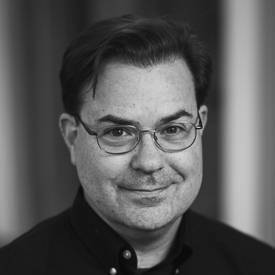
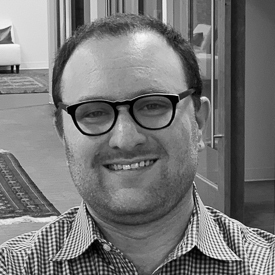
Dave Bittner: Hello everyone and welcome to "Caveat", N2K CyberWire's privacy, surveillance, law, and policy podcast. I'm Dave Bittner, and joining me is my co-host, Ben Yelin, from the University of Maryland Center for Cyber, Health, and Hazard Strategies. Hey there, Ben.
Ben Yelin: Hello Dave.
Dave Bittner: On today's show, Ben discusses a new case on Flock camera surveillance. I've got the story of a woman arrested for sharing threats of violence with Claude AI. And later in the show, my conversation with Meredith Burkart, Senior Director of Government Affairs and Public Policy at Halcyon. We're discussing designating ransomware attacks against hospitals as acts of terrorism. While this show covers legal topics and Ben is a lawyer, the views expressed do not constitute legal advice. For official legal advice on any of the topics we cover, please contact your attorney. [ Music ] All right, Ben, we've got some interesting things to cover here this week. You want to kick things off for us here?
Ben Yelin: Sure. So I've been waiting for a body of law to develop around Flock camera surveillance. It's been a topic of fascination for me. You know, generally people who drive on public roads don't have a reasonable expectation of privacy, but does that change when you have this huge network of cameras? They're everywhere, and you can kind of track the whole of a person's movements.
Dave Bittner: Right. I mean, we've touched on this with other things as well, where it's sort of this matter of scale and velocity compared to the old days.
Ben Yelin: Right, exactly, and it kind of depends on your judicial philosophy whether you're willing to turn something, that otherwise would not be a search, into a search just because it's either a long duration, or the depth of the surveillance, or the particular type of it. And courts have not really settled on any justiciable standard for that question. But here we have a really interesting case that just came in from a federal district court in Oklahoma. It is United States v. Melisa Susan Kyle, who is the defendant. She was arrested. The funny part about this case, and this is just, like, a great window into our legal system. To skip to the end of the story --
Dave Bittner: [Laughter] Okay.
Ben Yelin: -- she had, like, a bunch of drugs in her car. D
ave Bittner: Okay.
Ben Yelin: So, like, she was a criminal, she was illegally distributing drugs.
Dave Bittner: Okay.
Ben Yelin: But you have to start from whether the surveillance that led to that drug bust was legal.
Dave Bittner: All right.
Ben Yelin: Initially, the only indicia of suspicion that law enforcement had in the state of Oklahoma was that she had a California license plate. You know, California license plate driving in Oklahoma. Is it unusual? Maybe. Would that be caused to pull somebody over and start an investigation? Generally not.
Dave Bittner: Say, I, I've played license plate bingo when on the road.
Ben Yelin: Oh, well, we all have. Yeah. That's a favorite pastime of mine on the interstate.
Dave Bittner: That's right.
Ben Yelin: And, you know, people move and travel.
Dave Bittner: Sure.
Ben Yelin: It's funny because at one point in this case, the judge is, like, she had a very innocent explanation for why she was traveling to different states, even though, as I said, in the end, she was transporting illegal drugs.
Dave Bittner: -- illicit materials. Okay.
Ben Yelin: Nevertheless, based on that sole indicia, this law enforcement officer in the state of Oklahoma conducts an investigation using the Flock camera network. So, they have her license plate, her California license plate. They put it into the Flock database and they get a bunch of hits. And according to law enforcement, this is a little bit suspicious. There are hits kind of near the Mexico border in California, but going back and forth between parts of Southern California and the Mexican border. Enough, at least in the eyes of this Oklahoma law enforcement agency, to conduct a traffic stop. And that's where they do this search of the car and realize that she is indeed transporting illegal drugs. But that is, what we say in the legal world, fruits of the poisonous tree. You have to look at the original search and figure out whether that search is constitutionally permissible. And what this judge says is that it is not, that this kind of bulk mass surveillance of Flock camera networks is unconstitutional because of its scale, because it is beyond just one law enforcement officer observing a car and a license plate on a street. It's something that's far more ubiquitous, that's far more involved, and that has to do with the nature of Flock cameras and their networks. To caveat this, so to speak, you know, we're talking about one single federal district court judge. This is going to be appealed in short order to the United States Circuit Court of Appeals. This is a Joe Biden-appointed judge, so, you know, it's not like we have a Trump judge here, I think. Biden was known for nominating obviously more liberal judges who might be amenable to seeing the Fourth Amendment in this way. But we have this really interesting case where the only fact that law enforcement was aware of prior to searching the Flock database was that this person had a California license plate. Because of that, they entered a traffic violation into the Flock camera system. That gave them justification to search the Flock camera network. And that gives them access to this database. What's fascinating about this decision is when it catalogs travel over a long period of time, it turns into something beyond what we traditionally have thought of as automated license plate reader surveillance. It turns into something that's more akin to the Supreme Court's analysis in Carpenter about cell site location information, and a little bit in the Chatrie case about geofence warrants, where the nature of their surveillance itself makes this a Fourth Amendment search. Fourth Amendment search depends on whether it violates somebody's reasonable expectation of privacy. And while you don't have a reasonable expectation of privacy simply in your license plate as it relates to one cop or one camera, you do have a degree of privacy to protect you from this vast network. Flock, for their part, they said, you know, we're not a party in this case, so we're not going to comment on it. But obviously it would be very bad for Flock cameras if the evidence is suppressed in this case, because one of the main justifications for law enforcement purchasing Flock cameras is that this is publicly available data. It's not subject to the constraints of the Fourth Amendment because people don't have a reasonable expectation of privacy in their license plates. So I, it's a really interesting case. I don't know if the reasoning here is going to be adopted in other district courts across the country or in circuit courts, but it's the first time we've had a judge say, hey, this is beyond normal automated license plate reader surveillance. This is something that's categorically different.
Dave Bittner: So, is the initial suspicion based on the out-of-state license plate the ultimate problem here? In other words, it's not illegal to drive from state to state in the United States, right? We do it all the time. You know, I'm in Virginia, I'm in Pennsylvania, wherever. And that shouldn't be enough to raise suspicion to then go to the Flock system and do a search. Is that the fundamental issue here?
Ben Yelin: Yeah, and I think that ultimately the case could be decided on those grounds. If the judge had just said, forget the Flock camera data, I'm not going to decide whether the Flock camera data here constitutes a Fourth Amendment search where a warrant should have been required. Really, the evidence should be thrown out because the initial search was based on an improper predicate. The simple fact that this person had an out-of-state license plate, therefore, everything that comes after that is fruit of the poisonous tree. It should be suppressed. Don't even need to get into this Flock camera analysis. The judge here didn't do that. Luckily for us, she has a really interesting discussion about Flock cameras. And, you know, I think the reason she has that discussion is that there are going to be future cases where perhaps that initial investigative step is something that's more justifiable than we have an out-of-state license plate driving through this state. And this is an opportunity to weigh in on the more difficult legal question, which is about the Flock cameras and the vast surveillance. This ability to reconstruct a person's movements from thousands of observations without a warrant is what's interesting about this case, and it's why we've triggered Fourth Amendment protection here. But yeah, I mean, if I were a judge, I probably would have decided this on the narrower grounds of you had an investigation that did not have a proper predicate. Everything that comes after that, no matter how damaging it is to the criminal defendant, is fruit of the poisonous tree.
Dave Bittner: Is it fair to say that a police officer can't pull someone over on a feeling? Is that right?
Ben Yelin: Yes, that is correct. So you have to have some type of suspicion, but the suspicion can be minimal. Obviously if you violate any traffic laws, that is a full justification for a stop.
Dave Bittner: Right.
Ben Yelin: So if you see videos of people who are drunk driving, they're like, how could you pull me over for just a taillight? Like, they can absolutely pull you over for just a taillight [laughter]. Any justification --
Dave Bittner: Right.
Ben Yelin: -- that you're violating any type of traffic statute is grounds to be pulled over, even if you are mistaken. So let's say there's some sort of weird reflection that makes it seem like somebody's taillight is out but the taillight is actually not out.
Dave Bittner: Right.
Ben Yelin: And then the police pull the person over and they find drugs in the car. You can still prosecute that person, because law enforcement had a good faith reason for pulling the person over. Here, obviously they don't really have a good faith reason. You have to have some indicia of something beyond, you know, I just have a bad hunch about this person. That is not constitutionally permissible. You cannot pull over for hunches.
Dave Bittner: So is the notion here, I'm sorry I'm trying to get into specifics and split hairs, but I guess that's what we do here, right?
Ben Yelin: That is exactly what we do here.
Dave Bittner: Is the issue Flock's collection of all this data, or the fact that the law enforcement officer had access to it without a warrant? You know, what is the judge targeting here?
Ben Yelin: So, if there, if the, if law enforcement had sought a warrant from a neutral magistrate, I think this would have been more constitutionally permissible. Again, you still have the problem that everything is downstream from the original illegal search, but it's the warrantless nature that makes this Flock surveillance in particular a Fourth Amendment problem. You do not have to secure a warrant to obtain data that doesn't constitute a Fourth Amendment search. So that's why you always have to answer that threshold question, is this a search for Fourth Amendment purposes? And what the judge is saying here is yes. Even though traditionally courts have not held that automated license plate readers are searching your license plate, because you're on public thoroughfares and so you don't have a reasonable expectation of privacy, that's all changed now given this vast network. So once you've established that there's a search, then there is a requirement to have a warrant supported by probable cause. Law enforcement oftentimes in cases like this, even if the judge rules against them, they'll go back and say, well, you know, we didn't really know what the state of the law was, so we ran that search in good faith. We ended up finding that this person had drugs, so under this good faith exception, like, you should just sustain her conviction anyway. The judge here does not seem willing to do that, that basically all the evidence here is poisonous. They don't see law enforcement as having acted in good faith, and if this decision is upheld on appeal, and the government has a right to an interlocutory appeal, which is before all matters are settled of this suppression order. You know, unless the appeal is successful, this person is going to be freed from incarceration, even though, again, she had lots of illegal drugs in her car.
Dave Bittner: Right, right. So, what typically happens when an interesting judgment like this comes down is, whether or not it's struck down on appeal, is this the kind of thing where this could be a snowball where other judges see, you know, the seal has been broken, so now there's considered to be more leeway in ruling this way? Or what happens historically with something like this?
Ben Yelin: Well, it usually always starts with one opinion. I mean, judges can be very persuasive to fellow judges, and there are going to be a lot of similar cases that emerge out of Flock camera surveillance. And so now you have persuasive authority. Sometimes this starts with academics. I've always got to put a plug in for those academics who write law review articles and judges read those and come up with new theories. But even if it's not binding in your jurisdiction, other judges can look at this and say, we have very compelling reasoning here that Flock camera surveillance is something that's categorically different than traditional automated license plate reader surveillance and therefore requires the protection of the Fourth Amendment. I think you could see other courts adopt that rationale. Now, if the appeals court in this jurisdiction comes back and says that's not a thing, this judge is mistaken, the state of the law within this jurisdiction is that no matter how vast a network is, ALPRs are ALPRs, ipso facto no search, then obviously this isn't going to be a very persuasive authority. So a lot of it depends on what the circuit court does. But certainly you could see other judges and other similar cases come to the same conclusion. And I think it's a very justifiable conclusion based on Flock cameras and based on what the Supreme Court has said about things like historical cell site location information. Which again, you know, traditionally that's something that you voluntarily shared with your cell phone provider so you don't have a reasonable expectation of privacy in that data. But what the Supreme Court has said is we're not in the days of landline phones anymore. Maybe you're voluntarily giving your phone company call detail records when you dial your phone in the 1970s from your rotary phone, but that's not how cell phones work. They travel with us. They can catalog our movements for periods of weeks and months. And that's something that requires greater Fourth Amendment protection. Certainly, this is, this reasoning didn't come out of nowhere. I mean, I think it's reflective of what the Supreme Court has said in other concepts.
Dave Bittner: All right, well, I mean, it's going to be interesting to follow. I guess it all, I mean, a huge part of it is just what happens on appeal, right?
Ben Yelin: Yes, absolutely, and I'll certainly be following this to appeal and, well, you know, people are going to be arrested based on Flock camera evidence. So, there are going to be a lot of future cases that depend on whether judges adopt this more expansive view of Flock cameras as vast networks rather than Flock cameras as a series of individual cameras. And so we're going to have a good idea about how far courts are willing to extend the Fourth Amendment to reach this really novel situation. And I'm, we're going to keep following it. I'm going to be very interested.
Dave Bittner: Yeah. I'd say my personal opinion is it seems to me like requiring a warrant is reasonable, and particularly with just the huge number of cases of abuse that we've seen of law enforcement folks using these Flock databases for their own personal use for, you know, to track, to stalk former relationships and things like that. It seems like there needs to be a, my take, anyway, is that it would be a good thing for there to be an additional level of scrutiny before anybody can just dig into one of these Flock databases, given what's in them.
Ben Yelin: Totally. And I think Flock recognizes that. Flock, the company. You know, they've changed their default retention period from 30 days to 7 days. You know, I think they're trying to institute additional safeguards because they know people are out there, like, physically destroying Flock cameras.
Dave Bittner: Right [laughter].
Ben Yelin: People are deFlocking their neighborhoods.
Dave Bittner: Right. Right.
Ben Yelin: So there's a lot of anger out there about this.
Dave Bittner: Yeah.
Ben Yelin: And Flock obviously doesn't want its business to go down the drain. And from law enforcement's perspective, like, this is absolutely a very useful tool if you are a law enforcement official. And I would not want to lose access to this tool, so you should find a way to make this more constitutionally permissible. I know warrants are annoying. You know, I've talked to a lot of lawyers who've had to draft warrant applications, and it's very time consuming. You know, it's filling out paperwork. But we have this constitution constitutional system and the Bill of Rights for a reason. And when we're talking about something that could reveal a person's movements over a long period of time, I think it should trigger some type of Fourth Amendment protection. Warrants, yes, are annoying, but I think it's part of having access, it's part of law enforcement having access to these tools in the first place. They're getting a huge advantage here and so to maintain that equilibrium, I think you have to grant a level of protection to people against this type of surveillance.
Dave Bittner: Yeah. I agree. We'll see what the appeals court thinks. And then I suppose it's inevitable that someday this is going to make its way to the Supreme Court, right?
Ben Yelin: Probably. Yeah. I mean, it would be great if we had a circuit split between courts of appeals here, because that's when you see cases go to the Supreme Court generally, is if you have a split among circuit courts. So, we'll wait for that. You know, we're at the very early stages here, but this was just eye-opening to me, even though it's just a district court case.
Dave Bittner: Everything moves so slowly, Ben.
Ben Yelin: I know, it's so frustrating, especially in the tech world, when it's, like --
Dave Bittner: [Laughter] Right.
Ben Yelin: I just rolled out a new product in three days, and it's already changed the world, and --
Dave Bittner: Right.
Ben Yelin: -- edition 3.0 is exponentially better than 2.0, which was released six weeks ago. The legal world is the proverbial sloth --
Dave Bittner: Right.
Ben Yelin: -- in that GIF, putting the stamp on the paperwork.
Dave Bittner: It'll be on the schedule maybe 18 months from now.
Ben Yelin: Exactly. Yeah.
Dave Bittner: All right, well, we will have a link to that story in the show notes. I've got a story. This is from TechSpot, and this is about a woman in Florida who was arrested because she had made some threatening statements in Claude. So, this is a story of a woman named Carly Heller. She's from Bonita Springs, Florida, and she claims that she was using Anthropic's chatbot bought like a diary. So she would just write down her thoughts of the day, what she was thinking, what she was doing, and in this interactive relationship with the AI chatbot. Allegedly, she wrote into Claude that she planned to shoot up the local sheriff's office. That triggered something within Claude that said, hey, this could be problematic. And that sent her diary entries over to human review. And sure enough, a human reviewed that entry and reported it. That made its way to the sheriff's office, and she was arrested for making a threat against law enforcement. What do we make of this, Ben?
Ben Yelin: I mean, am I wrong to be optimistic here? Because the system worked.
Dave Bittner: Yeah. Right [Laughter].
Ben Yelin: You have something that clearly seems threatening. The flagging system that Claude uses was triggered. It went in front of human review so it wasn't, you know, you have this automatic trigger through the AI and law enforcement comes within the next five minutes. Like, it goes to a human reviewer. They have individuals working at Anthropic who are, I'm sure are on call to review these types of things and get critical information to law enforcement officials. And it seems like police stopped this very credible threat that could have led to the deaths of other law enforcement officials. So, you know, you want to make sure that these are actual written threats of violence, and there are particular legal standards there. You know, it has to be something, you have protected speech rights if it's something that's theoretical and not something that is, has a level of imminence, that it would be the type of speech to cause imminent lawless action.
Dave Bittner: There's a whole, like, thought police problem, right?
Ben Yelin: Exactly. So if that person in their Claude diary had instead written, like, "I think over the long run it would be better if these law enforcement officials were dead." By the way, I hope nobody clips that and uses it against me.
Dave Bittner: [Laughter] Right, right.
Ben Yelin: If she had said something like that, I think that's categorically different because that's not a direct threat. But to say, you know, I'm about to go do this, that I am planning to attack a sheriff's office, I think that indicates that action is potentially imminent and I think Anthropic is fully justified to disclose that information in this type of emergency. They have a very clear policy. I'm sure Ms. Heller read the terms and conditions when she signed up, you know, all 300 pages of them. And they have a very clear policy that they will divulge information to law enforcement when they think that doing so is necessary to prevent death or serious physical injury. And this definitely appears to be such a case. The happy ending here is that the potential criminal was detained without incident. She's going to be charged. It is a second-degree felony charge for making a written threat of violence. And so, you know, the lesson to the rest of us here is your conversations with your chatbot are not private. If you're having an innocuous conversation, you know, if you're asking it to give you an alternate history of some world war, not that I've done that myself [laughter], and tell me how things would have turned out, you know, that's not going to make it to law enforcement. 99.999% of your conversations, you know, if you tell ChatGPT about the rash on your body and ask what its advice is for medication, not going to make it to law enforcement. You know, it has to be a very specific trigger. You have a level of human review. But, you know, you are not talking, this is not, like, an end-to-end encrypted conversation. You are potentially sowing the seeds of your own demise if you confess to attempting to commit crimes over your favorite chatbot.
Dave Bittner: Well, in just, I know in the past couple of weeks, we talked about how prosecutors were looking to use people's chatbot history to make their cases, and how, you know, similar that is to a Google search history to try to make a case that someone's up to no good. I think it's interesting, I guess one of the things that caught my eye about this story is I think many of us still have this notion that when we are typing something into the computer, that it's just between us and the computer. That the computer is this cold, mechanical thing and it's not, who's it going to tell, right? And, but yet, so in this case, we see that there are triggers that will put your conversation in front of a human for review and that could lead to law enforcement knocking on your door to have a conversation.
Ben Yelin: Yeah, I mean, if you really want to confess the crimes that you are about to commit, you've got to get a paper diary [laughter]. Now, maybe that will also be used as evidence against you if law enforcement gets a warrant to look at your diary, which they very well might. But yeah, I mean, we are trying to protect people's health and safety, and I think it is, it makes perfect sense to have these policies internal to Anthropic that if there's a legitimate threat of violence, it's turned over to law enforcement. And we see this in other fields as well. You go to your first therapy appointment, they'll tell you, like, everything you say here is confidential except, you know, if you say that you're going to harm somebody or harm yourself, then we are obligated to report to law enforcement. And I think it's kind of that same spirit here that, yes, these conversations for the most part are private. The vast majority of what you write to your favorite chatbot is not going to be revealed to law enforcement, but there is an ear, so to speak, on these conversations at all times, looking out for these trigger words. And because we have the technological capability to pull out these trigger words, analyze them quickly, and get information to law enforcement, yes, people should be aware that what they're typing in that chatbot is, at least has the potential to get them arrested and prosecuted.
Dave Bittner: All right, well, like you said, you know, it seems like the system worked here and the safeguards they put in place, that chain connected effectively. So, you know, good for them.
Ben Yelin: Yeah, we don't have very many optimistic stories on this podcast. So, usually, especially when it comes to AI, contemporary AI policy --
Dave Bittner: Right.
Ben Yelin: -- there's a lot of gloom and doom. So, you know, sometimes it's good to highlight when the system works. Except I'm sure this particular suspected criminal is not happy that the system worked in this case.
Dave Bittner: No, I mean, she's facing a felony charge, and it would be interesting to see what kind of defense they mount for her. You know, to say, oh, she was just ideating and, you know, she was actually no harm. You can imagine all those arguments.
Ben Yelin: Right, right.
Dave Bittner: So we'll see.
Ben Yelin: Yeah, I mean, we'd have to see what the exact language was, because, you know, she might have an argument there. But from everything indicated in this article, I don't think, you know, that's going to end up being a valid excuse defense here.
Dave Bittner: Yeah. All right. We'll have a link to that story in the show notes. And of course we would love to hear from you. If there's something you'd like us to consider for the show, you can email us. It's caveat@n2k.com. [ Music ] Ben, I recently had the pleasure of speaking with Meredith Burkart, Senior Director of Government Affairs and Public Policy at Halcyon. And we were talking about designating ransomware attacks against hospitals as acts of terrorism. Here's my conversation with Meredith Burkart.
Meredith Burkart: So I don't think I'm saying anything new when we say and continue to see that hospitals are a ripe target for ransomware actors, specifically because time is short and of the essence when they're making decisions about what to do after they have experienced a ransomware attack, whether to pay to get systems back up and running or not. And that high-pressure environment is certainly something that the ransomware actors themselves can leverage when communicating with the hospitals and potential negotiations on what happens when a ransomware hits a hospital. The digital system systems go dark, almost everything runs on fragile, dangerous paper backup. So when those attackers encrypt the hospital systems, in conversation with folks we've talked to at hospitals and various associations that try to help them out on that front, we just find that nurses can't pull up patient records, imaging teams can't get scans to surgeons, diagnostic tools like MRIs and CT scanners become unavailable. For example, Ascension Healthcare's 2024 attack disrupted 120 hospitals. So, staff had to use paper backups and runners to hand deliver printed scans to operating rooms. And if I had a dollar to every time I heard that a healthcare system had to run to, turn to paper runners to deliver blood work or orders, etc., and really work hard to implement that system, I think I'd at least be able to pay for my kids' Christmas presents. So, that's to give you a sense of the number of people I've talked about who've had that story. But also restoring operations in the Ascension case, and this is public information, took 37 days and cost $130 million. They certainly aren't the only ones with that story. Meanwhile, most recently we've actually seen, for a broader view, the University of Minnesota has a study that between, they found that ransomware contributed to at least 47 patient deaths between 2016 and 2020. And they've actually been updating that study because I think we all believe that the numbers have increased, but I'd really like to see more data beyond that. And just to reemphasize, dialysis can't wait. Stroke victims need immediate imaging. These attackers know that, they proceed anyway. And so that's really what we're seeing when those attacks happen from a general point of view.
Dave Bittner: You know, we report on these situations far more, you know, often than anyone would like. And one of the things that always strikes me is when patients and ambulances are diverted to other hospitals, and that time factor has to be a real issue. It's not overstating it to say that these are life-and-death situations. Do I have that right?
Meredith Burkart: You do. And I think the term that I've seen used the most when referring to exactly what you pointed out is not just one hospital or one healthcare center. When those diversions have to happen, there's a blast radius where other institutions are trying to absorb the extra patients and, or even a backlog at the hospital that was hit after they recovered for trying to fit in all of the bronchoscopies, for example, that were supposed to be scheduled the week that they were down. And now they have to fit them in with others who are just as urgent. So, there's a real blast radius in the locale or even the state. So, the recent University of Mississippi Medical Center ransomware attack, it's really important to note that was the only level 1 trauma center in the state. And so if anyone was in need of services at a level 1 trauma center, it was up to the other hospitals in Mississippi, or even trying to transport folks outside of the state. And those other institutions had to absorb those blows as they were trying to recover. So, I think it is quite serious.
Dave Bittner: You know, when we think about the laws of armed conflict and treaties around the world, hospitals are generally considered off limits. That's something that everyone pretty much agrees with, if nothing more in principle. And yet these ransomware operators ignore that reality. I guess I'm a little surprised that we haven't seen more international political pressure to try to take hospitals off the table here.
Meredith Burkart: I completely agree. And I too am surprised we haven't seen as quick of action, although I'm rather heartened to see we've seen some. So, we saw the United Nations some years ago convene on this very specific topic. And the head of the World Health Organization testified in a UN Security Council hearing that this was a very serious matter and it needs to be addressed by an international coalition of the willing. And you saw the United States, France, and others go on record, also honoring that this was a very important matter. Even the Russian representative to the Security Council admitted that it was a very serious matter, although there were some thoughts about attribution in the room that might, you might want to go into and for ... That there might not have been agreement on. But what I'll say is if a bombing on a hospital is a war crime, locking one down with ransomware and holding it hostage should be treated at least in similar, very similar way, in my humble opinion. And so, for example, under federal law, terrorism includes acts dangerous to human life that appear intended to coerce a civilian population. And the folks that they're coercing, especially if, say, a level 1 trauma center is taken offline, are a very large civilian population who rely on that service. And so ransomware actors encrypting hospital systems and demanding payment as a condition of restoring care, I truly believe that's coercion, it's hostage taking. And so I too believe that it should be taken as an issue of life and death, and treated as such.
Dave Bittner: Is it possible that we could see these acts against hospitals categorized as acts of terrorism? Do, is there a framework in place where that's a possibility?
Meredith Burkart: I certainly hope so, and I believe there's a framework in place. So, we've done a lot of work at Halcyon studying this specific issue, designating ransomware actors who target hospitals specifically, keeping it very narrowly scoped, as terrorism, as acts of terrorism. And we believe the framework is there. So, Executive Order 13224 designates the State Department in coordination with Treasury and the Department of Justice, including FBI and my former agency, with deliberating on whether or not to make terrorism designations. And there's a traditional path of making these terrorism designations to traditional-seeming terrorist groups such as ISIS, Al-Qaeda, and others. However, I also think there is an argument to be made that these specific groups who target ransomware and where there is a threat to life or actual, like, causation of death or harm is being done, that at the very least, that process in that forum that is hosted between State and Treasury and DOJ with the input of other stakeholders. Usually through the National Security Council and perhaps for cyber cases with the help of the Office of the National Cyber Director, I do believe there's a forum and a path and the expertise for deliberating that and making those designations.
Dave Bittner: What would cause a delay here? What sort of reticence would people have? Is there another side to this story?
Meredith Burkart: So I think there are a couple of things that could cause delay. So, from an administration and good governance side, as someone who served for 15 years in the federal government, I am rather conservative when trying to do new things with existing legal authorities because you aren't sure what unintended consequences you might have. And also whether, and to that end, whether if something is legal, whether it is indeed prudent from a policy perspective. And so I think some of the delay is the use of an existing legal authority in a new context. That's why we have those forums and why we have career professionals staffing folks who are appointed in a political capacity, and those folks working together in a very systematic, deliberative review process to make these determinations. And I do believe that you shouldn't rush through such a deliberative process and consideration. So that's something that could hold it up, especially when there might be other priorities when it comes to terrorism designations that are just made by policymakers. Another thing that might cause pause, and this is something that I have encountered in conversation with several stakeholders on this front, is potential unexpected consequences for the hospitals themselves. So if you designate certain ransomware actors as terrorists, might that have an impact on their cyber insurance on the backend, if they encounter a ransomware attack in the future that's committed by those same actors who are now designated as terrorists? Or if there's uncertainty, whether about who done it with who targets them, whether those folks might be terrorists, might that have an impact on cyber insurance coverage? And I think there's a solution to that, but it takes some real work between the insurance industry, the hospitals, the federal government, to make sure that solution is in place before moving forward on designations. And so there's a certain order of how to do this. And I think it's worth it because of the deterrent impact such designations might have. However, it would require some work. And that's where I think the major delay is likely to happen, if the federal government decides this is something they should actually consider seriously.
Dave Bittner: Could this be the kind of thing where cyber professionals could make a difference in contacting their representatives, writing letters to their congresspeople?
Meredith Burkart: Oh, absolutely. I truly believe that those who care about ensuring their healthcare systems are defended from ransomware, hospitals themselves, or hospital associations, as well as any other sort of stakeholders who may have an interest in deterring ransomware against hospitals and other critical infrastructure. Writing to their congressperson and asking them to take note, and ask especially the State Department, Treasury, and DOJ to look into this at the very least. It's something that I think could absolutely move the needle. But I really do hope that this is looked into, and I have a lot of faith from some of the conversations that I've had, that there are folks who are in positions of authority in the federal government right now who are doing just that.
Dave Bittner: All right. Well, Meredith, think I have everything I need for our story here. Is there anything I missed? Anything I haven't asked you that you think it's important to share?
Meredith Burkart: Sure. I think I'd just like to mention that if this, there are terrorism designations we can do to protect hospitals from ransomware attacks. There are also other tools. So I'm a bit of a policy wonk and I'm always looking for new legal authorities and interesting ways that we can use old things to have new outcomes. And I think there are other things we can do. And that includes felonious murder charges potentially against ransomware actors who pose a threat to life or actually are proven to cause taking, cause folks losing their lives. And there are other options we can take as well. And so that's one point I make. The other is that I think that the cybersecurity industry could absolutely help if we go down this route of terrorism designations. And that has to do with the amount of intelligence that they can help provide on attributing certain attacks to specific actors. Because that's really what is going to be needed to hold these folks accountable for what they've done, and it would be needed in a felonious murder charge context, it would be needed in a terrorism designation context, it's also needed for all of the things that we already do, and that is sanctions or traditional prosecutions under federal hacking charges. And I really think that that's important that there are opportunities for industry to contribute if they so desire. [ Music ]
Dave Bittner: Ben, what do you think?
Ben Yelin: It's a very conflicting subject for me. I mean, I lived through the 2000s, and I'm very conscious for just calling things terror, calling everything terrorism as a way to justify, you know, whatever, surveillance, torture, extraordinary rendition all of those things. But ransomware attacks on hospitals and health systems are a very serious problem. They are attractive targets because they have a wealth of very sensitive information. It can be sold on the dark web. Obviously cyber criminals think that they can extract a large ransom, and they have in many instances. You know, I think our criminal laws might have enough of a handle on these types of situations that we don't have to resort to calling this terrorism with things like the Computer Fraud and Abuse Act. You know, we can still prosecute these as crimes without going all 2001 and making this an act of terrorism. But I certainly understand the impulse just because the consequences are so severe.
Dave Bittner: Yeah. All right. Well, again, our thanks to Meredith Burkart from Halcyon for joining us. We do appreciate her taking the time. [ Music ] And that is "Caveat", brought to you by N2K CyberWire. We'd love to know what you think of this podcast. Your feedback ensures we deliver the insights that keep you a step ahead in the rapidly changing world of cybersecurity. If you like our show, please share a rating and review in your favorite podcast app. Please also fill out the survey in the show notes or send an email to caveat@n2k.com. This episode is produced by Liz Stokes. Our executive producer is Jennifer Eibin. The show is mixed by Tre Hester. Peter Kilpe is our publisher. I'm Dave Bittner.
Ben Yelin: And I'm Ben Yelin.
Dave Bittner: Thanks for listening.